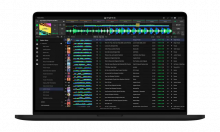
Does VirtualDJ integration mean the RANE SYSTEM ONE can run the software without a laptop? This guide separates the advertising from the documented setup. We explain what Engine DJ 5.3 adds through OmniSource, why VirtualDJ still needs a connected computer, and which connection, licence and driver requirements matter. If you are weighing standalone playback against a software-based setup, read the explanation before deciding what equipment to take to your next gig. Which workflow would suit you best?
“Buy Pioneer. It’s the club standard.” But what if the club expects you to bring your own equipment? After visiting five clubs with no DJ gear provided, DJ TOTY GEE questions the slogan. Inspired by the new Technics turntable, this article looks at Denon’s motorised-platter history and digital alternatives from RANE and Hercules. Before spending money on a badge, consider how you actually play—and why the final choice should belong to the DJ. Read the article and share your experience.
Engine DJ has quietly become one of the most important DJ platforms of the last few years — not because it’s trying to replace “classic laptop DJing”, but because it’s built around a different idea: your DJ system should be able to perform without being tethered to a computer.
At its core, Engine is a two-part platform:
Engine DJ Desktop (Mac/Windows) for music library preparation
Engine DJ OS running directly on supported standalone hardware
That structure matters, because it shifts the performance workload away from a laptop and into the device itself. You prepare your library at home, export/sync it, and then show up to play with far fewer moving parts.
The Engine DJ story (why it exists)
Engine DJ grew out of Denon DJ’s push into standalone systems — the idea that a DJ controller can be more than a MIDI surface for a laptop. Over time it evolved into a complete embedded performance environment: waveform displays, beatgrids, analysis, FX, playlists, streaming integration, and now even stems-related workflows.
A key modern turning point was Engine DJ 2.0 (Oct 2021), where the platform’s database and interface were rebuilt — and since then updates have arrived at a steady pace, adding performance tools, streaming partners, UI improvements, and deeper standalone capabilities.
The unique value: no cable to a PC during performance
For many DJs, Engine DJ’s biggest advantage is simple: you can play without a laptop cable.
Engine DJ OS devices can analyse music directly on the unit (beatgrid/BPM/key/waveforms), manage playlists, set hot cues and loops, and perform with FX — all without requiring a computer to be running in the booth. This reduces setup time, reduces risk of computer issues, and makes a cleaner stage/booth workflow.
That doesn’t mean “no prep” — it means the preparation happens before the gig on Engine DJ Desktop, then performance happens inside the device.
Engine DJ Desktop: prep, portability, and serious library tools
Engine DJ Desktop isn’t just a file exporter. It’s a full library preparation environment with:
Playlists and playlist folders
Search, filters and Smartlists
Track preview
Beatgrid editing
Hot cue and loop preparation
Metadata editing
Backup and restore workflow
One of the most practical features is library import: Engine DJ Desktop supports importing existing libraries from major DJ ecosystems, including rekordbox, Apple Music/iTunes, Serato DJ, and Traktor. That turns Engine into a realistic platform for DJs who already have years of playlists and prep work.
Streaming + cloud: where Engine DJ really differentiates
Engine DJ’s streaming story is tightly integrated into the standalone experience. The official Engine streaming page lists services including Apple Music, Amazon Music Unlimited, Beatport, Beatsource, SoundCloud Go+, TIDAL, plus Dropbox as a cloud source.
Two points stand out:
Streaming inside the standalone environment
You can browse and load tracks directly on hardware, and Engine DJ OS supports analysis/performance tools without needing a laptop in the chain.
Dropbox as a practical backup and portability tool
Engine positions Dropbox as part of a modern cloud library workflow for standalone DJing, which is a big deal if you want redundancy or travel-friendly setups.
What’s new in Engine DJ 5.0
Engine DJ 5.0 (announced mid-May 2026) is one of the most meaningful updates so far, because it pushes the platform deeper into “device-first” performance.
Highlights from Engine’s official release announcement include:
On-board stems rendering for RANE SYSTEM ONE (Engine calls it the first DJ hardware able to render stems without a computer)
RGB waveforms across devices
Track star ratings on hardware
FX and performance refinements (including new beat lengths for certain FX behaviours)
Desktop improvements including a guided Import Assistant for library migration
Even if you never touch stems, Engine DJ 5 is still meaningful because it refines the day-to-day workflow: library management, waveform clarity, and speed of preparation.
Supported hardware (Engine DJ OS ecosystem)
Engine DJ OS is designed around a defined hardware ecosystem. The official compatibility list includes these families and models:
RANE
SYSTEM ONE
Denon DJ
PRIME GO+, PRIME 4+
SC LIVE 2, SC LIVE 4
SC6000 PRIME, SC6000M PRIME, LC6000 PRIME
PRIME 4, PRIME 2, PRIME GO
SC5000 PRIME, SC5000M PRIME
Numark
Mixstream Pro Go, Mixstream Pro+, Mixstream Pro
This ecosystem focus is part of Engine DJ’s identity: it’s less about “support every controller ever made” and more about building a deeply integrated standalone platform.
On 8 May 2026, inMusic and Native Instruments announced a definitive agreement for inMusic to acquire Native Instruments. That timing matters, because Native Instruments had entered preliminary insolvency proceedings in Germany in January 2026, and in March 2026 CEO Nick Williams confirmed that the business was actively looking for new shareholders. The new deal is positioned as the solution to that process, with both companies saying the transaction is expected to close in the coming weeks, subject to customary closing conditions.
The first thing to clear up is the most common confusion: this is not a Traktor-only acquisition. Officially, inMusic is acquiring the broader Native Instruments business, not just its DJ arm. The public statements specifically name Native Instruments, iZotope, Plugin Alliance and Brainworx as part of what continues under the new ownership. Read together with Native Instruments’ own corporate pages, that means the deal stretches across the wider NI ecosystem: Komplete, Kontakt, Maschine, Traktor, Reaktor, NKS, hardware, software and services. So if you were wondering whether inMusic only wanted Traktor, the answer from the available evidence is no. It is buying a much larger creative-tech portfolio.
That also explains the strategic logic. Before this deal, inMusic was already a major music-tech owner with brands such as Akai Professional, Denon DJ, Numark, Rane, M-Audio, Moog, Engine DJ and SoundSwitch. Native Instruments brings something inMusic historically had less of at this scale: a deep, globally recognised software stack in production, DJing, mixing and mastering. The two companies had already been collaborating since 2025, bringing NKS integration to Akai and M-Audio controllers and NI sounds to MPC. The acquisition now turns that collaboration into ownership, and inMusic says the goal is to move faster, deepen integration and build better tools for creators.
For Traktor users, the immediate implications are reassuring. Native Instruments’ official FAQ says nothing changes today: products, licences, downloads, subscriptions and support remain fully active. That is the clearest short-term takeaway. In the medium term, though, there is still no official Traktor roadmap under inMusic. We do not yet know whether this will simply stabilise Traktor, or whether it will lead to deeper links with inMusic’s wider DJ ecosystem around Denon DJ, Engine DJ and SoundSwitch. That possibility is obvious, but it remains an inference rather than an announced plan.
As for the financial terms, the purchase price has not been disclosed. Trade reports from Mix and MusicTech both describe the amount as undisclosed, and the official press release also avoids stating a price. So if you are looking for a headline valuation, there is none on the public record yet.
My own take is that this deal is both a lifeline and a signal. It is a lifeline because it gives Native Instruments a path out of a damaging insolvency process and offers users immediate continuity. But it is also a signal of further consolidation in music technology. CDM argues that adding Traktor gives inMusic a more credible counterweight to AlphaTheta in DJ, while MusicRadar notes the obvious downside of so many major brands sitting under one roof. For users, then, the right conclusion is probably cautious optimism: the immediate risk around support looks lower, but the long-term question is whether inMusic can turn continuity into renewed product momentum